
AVID RELAUNCHES SOUGHT AFTER ILLAWARRA COMMUNITY
 26 August 2025
AVID Property Group (AVID) has officially launched its new project in Huntley, NSW with the developer now unveiling its plans…
29 September 2025
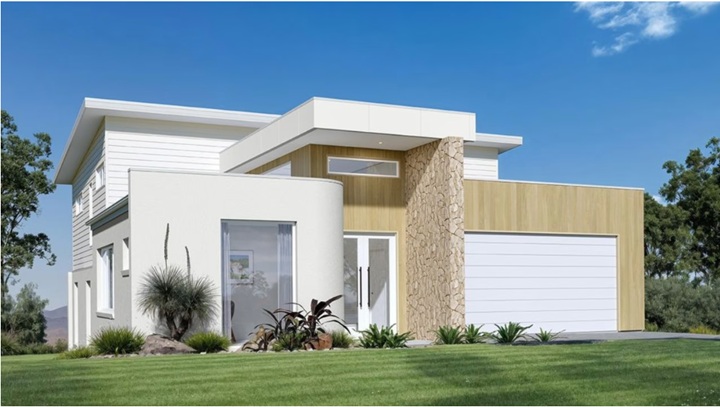
As power bills climb, Australians are rethinking how they design and build their homes. More than three-quarters of households received a shock energy bill in the first quarter of 2025, according to Compare the Market. With another hot summer looming, hopeful home buyers are searching for solutions that offer comfort without the constant drain of air conditioning.
One answer, it turns out, has been hiding in plain sight: the split-level home.
Working With the Land, Not Against It
For decades, sloping blocks have carried a reputation for complexity and cost. Excavation, retaining walls, and site preparation were seen as hurdles that turned many buyers away. But builders and developers are now flipping the script, showing that when designed with intent, a split-level home can be more affordable in the long run, especially when it comes to energy efficiency.
“By working with its surrounds, a split-level home can offer more comfort while also saving on energy bills,” said Danny Boubli, General Manager New South Wales for AVID Property Group. “Increasingly, buyers and builders are considering sustainability and cost-effectiveness, trying to minimise future costs and environmental impact where possible.”
AVID’s Forest Reach community in the foothills of the Illawarra Escarpment is one of the clearest examples. Here, blocks have been stepped to follow the natural topography, creating elevation, views, and airflow that reduce the need for artificial heating and cooling. Retaining walls are already in place, cutting time and upfront costs for buyers.
“Offering natural elevation and views, our split-level blocks can take full advantage of the picturesque location, looking out over the Illawarra region and lush bushland while catching glimpses of Lake Illawarra in the distance,” Boubli said.
Registered, ready-to-build blocks are now available from $487,000, with builder partners including Evolution Building Group and G.J. Gardner Homes offering tailored packages.
Energy Efficiency by Design
The sustainability benefits of split-level homes go beyond their natural positioning. Builders are combining smart layouts with upgraded materials to push efficiency further.
Darrin Thompson, Director and Owner of Evolution Building Group, explained how his team approaches sloping blocks:
“A split-level design maximises the natural features of the block, reducing the need for extensive excavation or fill. By working with the land rather than against it, we minimise environmental impact while creating homes that function more efficiently day to day.”
Thompson also points to the opportunity for better zoning. “Another advantage is the ability to separate living zones across multiple levels, creating spaces that can be more easily heated or cooled as needed. You’re not wasting energy conditioning parts of the home you’re not using.”
Evolution often pairs this design with double-glazed windows, upgraded insulation, and solar systems, further lowering running costs and carbon footprint.
Belonging to the Landscape
Design innovation is another key factor driving renewed interest. Split-level homes don’t just sit on the land; they become part of it.
“When we design a split-level home, we’re working with the slope, the movement of breezes, and the way sunlight shifts throughout the day,” said Anthony Williams, Design Manager at G.J. Gardner Homes. “By working with the land rather than fighting it, we reduce site disturbance and deliver homes that feel like they belong to the landscape.”
This connection to the natural environment doesn’t just deliver lifestyle perks like sweeping views and flexible layouts. It also makes the home more comfortable.
“Split-level homes mean cooler summers and warmer winters while creating more interesting and liveable spaces,” Williams said. “Think higher ceilings, better zoning between private and shared areas, and natural light where you need it.”
A Shift in Buyer Demand
For builders on the ground, the shift is clear.
Simon Curtis, General Manager for G.J. Gardner Homes Shoalhaven, Wollongong, Wilton-Appin and Southern Highlands, said demand for split-level homes is on the rise.
“We’ve seen more Australians looking for land with slopes or character,” Curtis said. “Beyond lifestyle, they’re realising the energy efficiency gains are tangible, better cross-ventilation, improved solar access, and lower reliance on artificial heating and cooling. For families, that means a home that’s not only sustainable but simply more enjoyable to live in.”
Balancing Costs and Benefits
Of course, building a split-level home isn’t always cheaper upfront. Site-specific designs and structural requirements can increase costs compared to a traditional flat-block build. But buyers are finding that lower land prices, combined with long-term savings on energy bills, even the playing field.
Boubli believes this balance is what makes the model so attractive. “While building a split-level home can be more expensive than a traditional build, the block is usually more affordable. That opens the door to more unique designs and the lifestyle and financial benefits that flow from them.”
The Bigger Picture: Energy, Affordability, and Resilience
For an industry grappling with soaring material costs, labour shortages, and pressure to meet government housing targets, split-level designs are more than just an architectural choice, they’re a strategy.
They respond to three major challenges:
• Energy costs: Rising bills are forcing households to rethink efficiency.
• Housing affordability: More affordable sloping blocks help offset construction costs.
• Climate resilience: Homes designed for airflow and solar gain are better suited to extreme weather.
In communities like Forest Reach, these challenges are being addressed head-on. Buyers can access affordable land, builders can showcase innovation, and families can enjoy homes that are comfortable, efficient, and connected to their environment.
Looking Ahead
As summer approaches and the next round of energy bills land in mailboxes, more Australians may look to designs that cut costs without cutting comfort.
Split-level homes won’t be the answer for everyone. But with developers, builders, and buyers aligning on their benefits from efficiency to liveability, they’re emerging as a serious contender in the broader push for sustainable housing.
As Thompson from Evolution put it: “We’re building homes that don’t just work for today, they work for the long term, financially, environmentally, and for the families who live in them.”
And in a market where both cost and comfort matter more than ever, that could be the real game changer.
Source: As published in The Good Builder
 26 August 2025
 13 May 2026